
What Do You Wear Under a Kilt? (Complete Guide for Beginners)

One of the most frequently asked questions about kilts—especially by beginners—is: what do you wear under a kilt? It’s a topic surrounded by tradition, curiosity, and sometimes even myths. Whether you’re wearing a kilt for the first time or simply exploring Scottish attire, understanding your options can help you feel more comfortable and confident.
In this detailed guide, we’ll explore the traditional practices, modern preferences, and practical considerations so you can decide what works best for you.
The Origins of the Question
Kilts date back to the Scottish Highlands, where they were designed as practical garments suited for rugged terrain and unpredictable weather. The traditional “great kilt” was a full-body garment that served as clothing, blanket, and protection all in one.
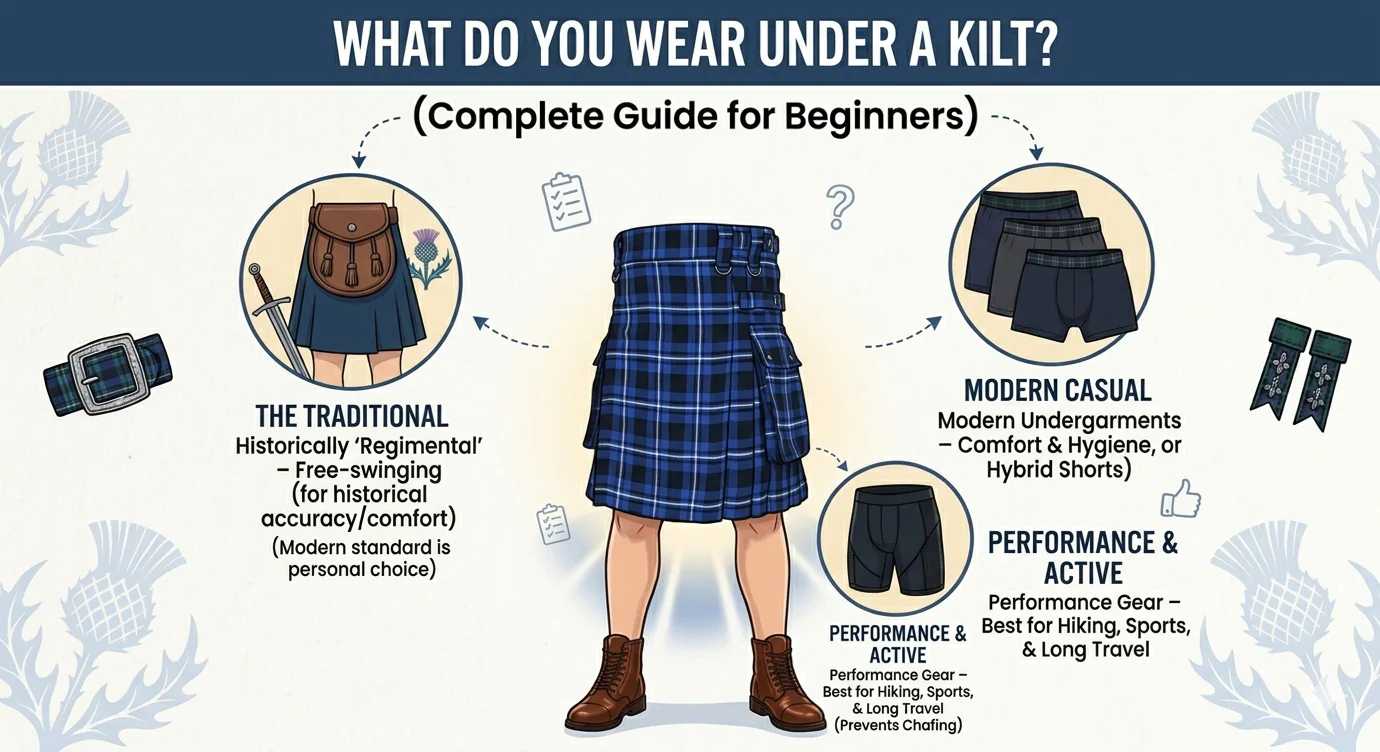
Back then, underwear as we know it today wasn’t commonly worn. This is where the famous tradition of “going regimental” comes from—wearing a kilt without anything underneath. While it may sound surprising today, it was originally about practicality, simplicity, and freedom of movement.
What Does “Going Regimental” Mean?
“Going regimental” refers to wearing a kilt without underwear. The term became popular among Scottish soldiers, particularly Highland regiments, who followed this practice as part of their uniform tradition.
Even today, some kilt enthusiasts and traditionalists continue to follow this approach, especially during formal events, military ceremonies, or cultural gatherings. For them, it’s about honoring heritage and maintaining authenticity.
However, it’s important to understand that this is not a strict rule. Modern kilt wearers have a wide range of choices, and personal comfort often takes priority.
Modern Perspectives: Comfort Over Tradition
In today’s world, most people choose to wear something under their kilt—and that’s completely acceptable. Social norms, hygiene, and lifestyle differences have all contributed to this shift.
Kilts are now worn in a variety of settings, from weddings and festivals to casual outings and even workplaces. In these situations, practicality matters just as much as tradition.
The good news? There are several comfortable and functional options available.
Popular Options for Wearing Under a Kilt
1. Briefs or Fitted Underwear
Fitted underwear such as briefs is one of the most common choices. They provide support, maintain modesty, and don’t interfere with the natural drape of the kilt.
This option works well for both beginners and experienced kilt wearers who want a balance between comfort and tradition.
2. Athletic Underwear
Athletic or performance underwear is designed for breathability and moisture control. If you’re wearing a kilt for long hours, traveling, or attending events, this can be an excellent choice.
These fabrics help prevent discomfort, especially in warmer climates or crowded environments.
3. Compression Shorts
Compression shorts are ideal for active situations—such as dancing, hiking, or participating in festivals. They provide extra support and reduce the risk of chafing.
They’re also a popular option for those who want complete peace of mind in terms of coverage.
4. Kilt-Specific Underwear
With the growing popularity of kilts, some brands now offer underwear specifically designed for kilt wearers. These are typically made to combine the freedom of traditional wear with modern comfort features.
While not essential, they can be a great investment if you wear kilts frequently.
What Should You Avoid Wearing?
Not all underwear works well with kilts. Certain styles can affect both comfort and appearance.
- Loose boxers: These can bunch up and disrupt the clean lines of the kilt
- Bulky fabrics: Thick materials can make the kilt sit awkwardly
- Ill-fitting options: Anything too tight or too loose can cause discomfort
The goal is to maintain the natural flow of the kilt while staying comfortable.
Does the Occasion Matter?
Absolutely—what you wear under your kilt can depend on the setting.
- Formal events (weddings, ceremonies): Some people prefer going regimental for authenticity
- Casual wear: Comfort-focused options like briefs or athletic underwear are more common
- Outdoor or active use: Compression shorts or performance underwear are ideal
Understanding the context helps you make the right choice without overthinking it.
Hygiene and Practical Considerations
Hygiene plays a key role, especially if you choose to go regimental. Since there’s no barrier between your body and the fabric, regular cleaning and proper care of your kilt are essential.
For everyday wear, breathable underwear can help maintain freshness and reduce the need for frequent washing. This is particularly important in warmer climates or during long periods of wear.
Confidence and Personal Preference
At the end of the day, the choice of what to wear under a kilt comes down to personal preference. While tradition offers guidance, it shouldn’t limit your comfort.
Some people enjoy the authenticity of going regimental, while others prioritize practicality. Neither approach is wrong—it simply depends on what makes you feel confident and at ease.
Common Myths About Wearing Kilts
There are a few misconceptions worth clearing up:
- “You must go regimental to wear a kilt properly.”
This is false—modern wear allows flexibility. - “Wearing underwear is disrespectful to tradition.”
Not true. Comfort and practicality are widely accepted today. - “Everyone goes regimental.”
In reality, most people don’t—especially in casual settings.
Understanding these myths helps remove unnecessary pressure, especially for beginners.
Final Thoughts
So, what do you wear under a kilt? The answer isn’t one-size-fits-all. From traditional regimental style to modern underwear options, the choice depends on your comfort, the occasion, and your personal style.
Kilts are about expression—rooted in history but adaptable to modern life. Whether you choose tradition or practicality, the most important thing is that you feel comfortable, confident, and ready to wear your kilt with pride.
FAQs
1. Do you have to wear underwear with a kilt?
No, you don’t have to wear underwear with a kilt. Traditionally, many people choose to go “regimental,” meaning they wear nothing underneath. However, in modern times, most kilt wearers prefer underwear for comfort, hygiene, and practicality.
2. Is it acceptable to go regimental in public?
Yes, it is acceptable, especially in traditional or formal settings. However, it depends on the situation and your comfort level. For public events or casual wear, many people choose underwear to avoid any awkward situations.
3. What is the best underwear to wear under a kilt?
The best options include fitted briefs, athletic underwear, or compression shorts. These provide support, prevent chafing, and maintain the natural drape of the kilt without adding bulk.
4. Can you wear a kilt without underwear at a wedding?
Yes, some people choose to go regimental at weddings for traditional reasons. However, it’s not required, and many prefer wearing underwear for comfort and confidence—especially during long events.
5. Is going regimental hygienic?
It can be, but it requires extra care. If you choose to go without underwear, you should ensure your kilt is cleaned regularly and worn in appropriate conditions. For daily wear, underwear is generally considered more hygienic and practical.