

How to Clean and Maintain a Wool Kilt: Complete Care Guide

A quality wool kilt is more than just a piece of clothing—it’s an investment in tradition, craftsmanship, and timeless style. Whether you wear your kilt for weddings, Highland games, formal events, or cultural celebrations, proper care is essential to preserve its appearance and longevity.
Unlike ordinary garments, wool kilts require special attention. The pleats, fabric, and construction are designed to last for years, even decades, when maintained correctly. However, improper cleaning or storage can damage the wool, distort the pleats, and shorten the lifespan of your kilt.
In this guide, we’ll cover everything you need to know about cleaning and maintaining a wool kilt so it stays looking its best for years to come.
Why Proper Kilt Care Matters
Traditional wool kilts are crafted from high-quality wool fabrics that offer durability, warmth, and elegance. While wool is naturally resilient, it requires different care than cotton or synthetic materials.
Proper maintenance helps:
- Preserve pleat structure
- Prevent fabric damage
- Extend the lifespan of the kilt
- Maintain color vibrancy
- Reduce unwanted odors
- Protect your investment
A well-maintained kilt can remain in excellent condition for generations.
You can get idea for the Best Kilts for Weddings 2026 which will make easy for you to select a best option for yourself.
How Often Should You Clean a Wool Kilt?
One of the biggest misconceptions about wool kilts is that they need frequent washing.
In reality, wool naturally resists dirt, odors, and bacteria. Most kilts only require occasional cleaning depending on usage.
General Guidelines
- Regular wear: Clean every 6–12 months
- Occasional wear: Clean as needed
- After spills or stains: Spot clean immediately
- Formal kilts: Dry clean only when necessary
Over-cleaning can actually shorten the life of the fabric.
Step 1: Brush Your Kilt After Wearing
The simplest and most effective maintenance habit is brushing your kilt after use.
Use a soft clothing brush to remove:
- Dust
- Dirt
- Pet hair
- Surface debris
Always brush in the direction of the wool fibers rather than against them.
This quick step prevents particles from becoming embedded in the fabric and helps keep the kilt looking fresh.
Step 2: Air Out Your Kilt
After wearing your kilt, avoid folding it immediately and placing it in a closet.
Instead:
- Hang it on a sturdy hanger
- Allow it to air out for several hours
- Keep it away from direct sunlight
Fresh air helps eliminate moisture and odors while allowing the wool fibers to recover naturally.
Step 3: Spot Clean Minor Stains
Small stains can often be removed without professional cleaning.
For Food or Drink Spills
- Blot the spill immediately.
- Avoid rubbing the fabric.
- Use a clean cloth with cool water.
- Gently dab the affected area.
- Allow it to air dry naturally.
Never use harsh chemicals or bleach on wool fabrics.
Step 4: Know When to Dry Clean
Most traditional wool kilts should be professionally dry cleaned when deep cleaning becomes necessary.
Consider Dry Cleaning If:
- The kilt develops strong odors.
- Stains cannot be removed through spot cleaning.
- The kilt has not been cleaned for an extended period.
- It has been exposed to significant dirt or moisture.
Always choose a cleaner experienced with wool garments whenever possible.
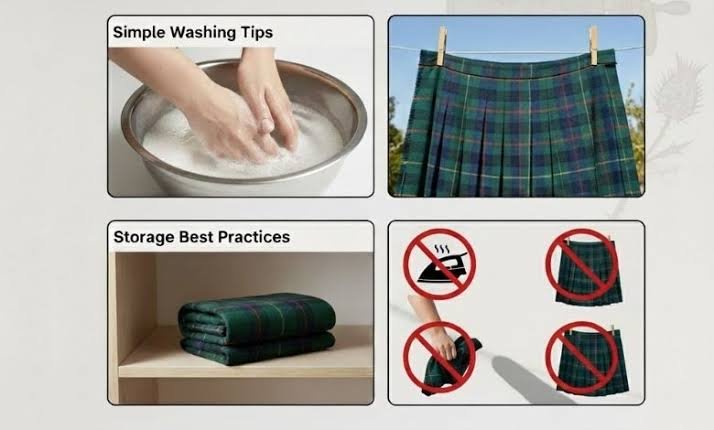
What Not to Do When Cleaning a Wool Kilt
Many kilt owners accidentally damage their garments by using improper cleaning methods.
Avoid:
Machine washing
Hot water
Bleach products
Tumble drying
Aggressive scrubbing
High heat ironing
These methods can shrink wool fibers, damage pleats, and alter the fit of the kilt.
How to Maintain Kilt Pleats
The pleats are one of the defining features of a traditional kilt. Proper pleat care helps maintain the garment’s distinctive appearance.
Pleat Maintenance Tips
- Hang your kilt properly after each use.
- Avoid crushing the pleats during storage.
- Store the kilt with pleats aligned.
- Use a garment bag for protection.
If pleats begin losing their shape, professional pressing is usually the safest solution.
You can learn How to Measure for a Kilt at Home which will help you to get idea about your custom kilt.
Proper Kilt Storage
Correct storage is one of the most important aspects of long-term kilt maintenance.
Best Storage Practices
- Use a dedicated kilt hanger.
- Store in a cool, dry environment.
- Keep away from direct sunlight.
- Avoid overcrowded closets.
- Use a breathable garment bag.
These precautions help prevent wrinkles, fading, and moisture-related damage.
Protecting Wool from Moths
Natural wool can attract moths if stored improperly.
To protect your kilt:
- Store it clean.
- Use cedar blocks or lavender sachets.
- Regularly inspect stored garments.
- Ensure adequate airflow in storage areas.
Taking preventative measures can save you from costly repairs later.
Caring for Kilt Accessories
Maintaining your kilt also means caring for the accessories that complete your Highland outfit.
Regularly inspect and clean:
Proper accessory care helps preserve the overall appearance of your outfit.
Traveling with a Wool Kilt
If you’re traveling for a wedding or event, protecting your kilt during transport is essential.
Travel Tips
- Use a garment bag.
- Fold carefully along existing pleats.
- Unpack and hang immediately upon arrival.
- Avoid placing heavy items on top of the kilt.
These simple steps help maintain a crisp and professional appearance.
Signs Your Kilt Needs Professional Attention
Sometimes professional maintenance is necessary.
Look for:
- Flattened pleats
- Persistent stains
- Strong odors
- Loose stitching
- Fabric damage
- Missing fasteners
Addressing issues early helps prevent more costly repairs later.
Final Thoughts
A quality wool kilt is designed to last for many years when cared for properly. By brushing regularly, airing it out after use, spot cleaning stains, storing it correctly, and seeking professional cleaning when necessary, you can preserve both the appearance and integrity of your garment.
Whether you wear your kilt occasionally for special events or regularly as part of your wardrobe, proper maintenance ensures it remains a timeless symbol of Scottish tradition and style. A little care today can keep your wool kilt looking exceptional for generations to come.
FAQs:
1. Can you wash a wool kilt at home?
Most traditional wool kilts should not be machine washed. Spot cleaning and professional dry cleaning are generally recommended.
2. How often should a wool kilt be dry cleaned?
Only when necessary. For occasional wear, once every year or two may be sufficient.
3. How do I remove wrinkles from a wool kilt?
Hanging the kilt properly often helps. For significant wrinkles, professional pressing is usually the safest option.
4. What’s the best way to store a wool kilt?
Store it on a dedicated kilt hanger in a cool, dry location using a breathable garment bag.
5. How can I protect my wool kilt from moths?
Keep the kilt clean, store it properly, and use cedar blocks or lavender sachets to deter moths.